Acoustic Design Strategies for Open-Plan Offices That Actually Work
Workplace design for better focus using acoustic elements

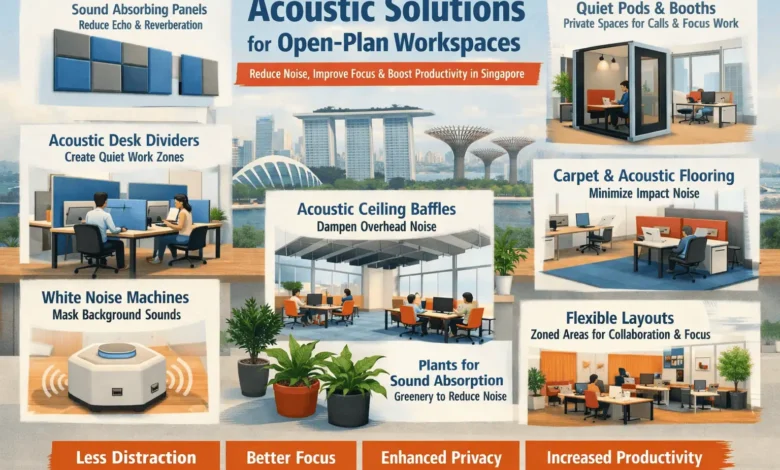
Open-plan offices are noisy. This isn’t news – everyone who’s worked in one knows the constant background hum of conversations, phone calls, and keyboard clicks. What’s less understood is that noise in open offices isn’t inevitable. It’s the result of design decisions, and different design decisions can produce dramatically different acoustic outcomes.
Most businesses try to solve office noise by adding a few acoustic panels and hoping for the best. That rarely works because noise isn’t one problem – it’s several different acoustic issues requiring different solutions.
Understanding the Different Types of Office Noise
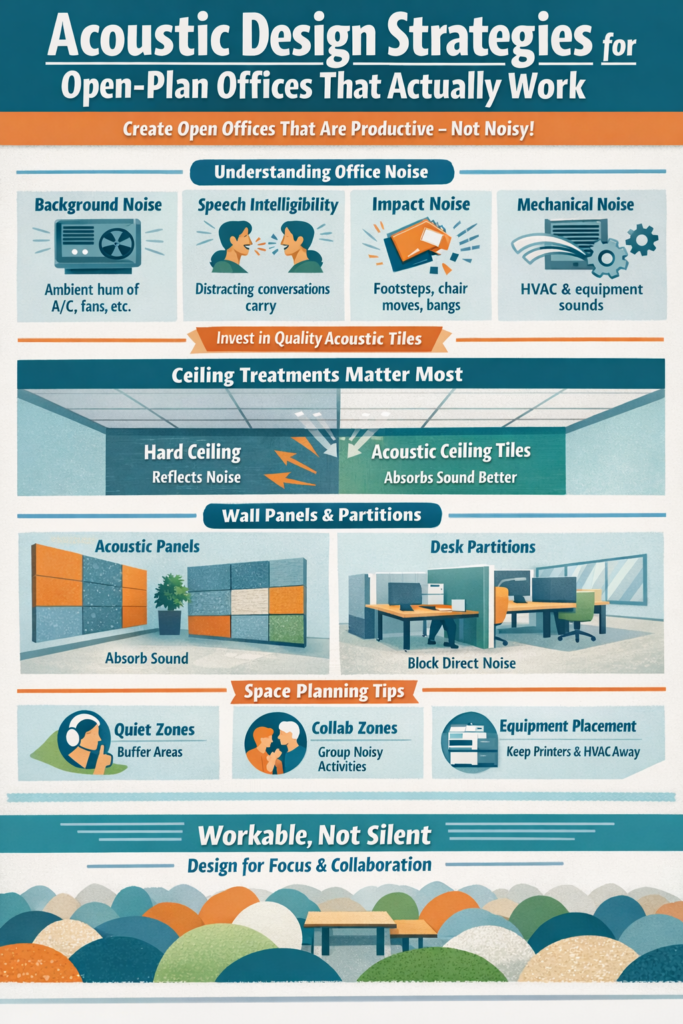
Before solving acoustic problems, understand what types of noise you’re dealing with. Background noise is the general ambient sound level – aircon, computer fans, distant conversations. Low levels of consistent background noise aren’t necessarily bad. Too much creates fatigue. Too little and every small sound becomes noticeable.
Speech intelligibility is whether nearby conversations can be understood. In open offices, being able to clearly hear what the person three desks away is saying is highly distracting. You want speech to be present but not intelligible.
Impact noise is sudden sounds like dropped items, chair movements, or footsteps. These create startle responses that break concentration. Mechanical noise from HVAC systems or equipment can be constant irritants.
Ceiling Treatment as Primary Defense
Ceilings are the largest unobstructed surface in most offices and have the most impact on acoustic performance. What you do with your ceiling matters more than any other single decision.
Hard ceilings – concrete, plaster, or hard tile – reflect sound back down into the space. This extends how far sound travels and increases overall noise levels.
Acoustic ceiling tiles absorb sound rather than reflecting it, but the difference between mediocre and high-performance acoustic ceiling tiles is significant in practice. Spending an extra $10-15 per square meter on better acoustic tiles is one of the highest-return investments you can make.
In open ceilings with exposed services – popular in modern offices – you lose the acoustic benefit of ceiling tiles entirely. If acoustics matter for your work, think carefully before specifying exposed ceilings.
Wall Treatment and Partitions
While ceilings provide broad acoustic absorption, wall treatment addresses specific problem areas. Acoustic wall panels in key locations absorb sound and reduce reverberation. Place these where sound builds up – behind desks in open areas or on walls adjacent to circulation paths.
Acoustic panels work by converting sound energy into heat through friction within porous materials. Effectiveness depends on thickness, density, and material composition. Thin decorative panels provide minimal acoustic benefit. Proper acoustic panels need meaningful thickness and absorptive core material.
Perforated timber panels with acoustic backing provide absorption while maintaining a warm aesthetic. But not all timber slat walls provide meaningful acoustic benefit – some are purely decorative.
Partitions between work zones don’t need to be full-height walls to provide acoustic benefit. Screens 1.2-1.5 meters high block direct sound paths between workstations.
In meeting rooms, full-height walls with proper acoustic seals are necessary. Glass looks good but provides minimal sound blocking unless it’s thick laminated glass with proper seals.
Flooring Choices and Impact Noise
Floors affect acoustics primarily through impact noise – footsteps, rolling chairs, dropped items. Hard floors amplify these sounds; soft floors absorb them.
Carpet is the most effective flooring for acoustic absorption. It dramatically reduces footstep noise.
Hard floors – timber, LVT, concrete – create more impact noise but are easier to maintain. If you’re using hard flooring, other acoustic treatments become more important to compensate.
Concrete floors are particularly problematic acoustically because they reflect and transmit sound well. Polished concrete floors in open offices create worst-case acoustic conditions.
Area rugs in open-plan spaces provide targeted acoustic treatment where impact noise is problematic.
Space Planning for Acoustic Zones
Physical layout affects acoustics as much as surface treatments. How you organize your space determines noise patterns.
Zone by noise level rather than mixing quiet and loud activities together. Put collaborative areas and meeting rooms together so conversations don’t bleed into quiet work areas.
Buffer zones between loud and quiet areas help transition noise levels.
Distance matters. Sound intensity drops with distance from the source. Simply putting more space between noise sources and people trying to concentrate helps.
Avoid long sightlines in open offices. When you can see 30 meters down a benching row, sound travels that full distance.
Place noisy equipment away from focus work areas. Printers, copiers, pantry areas should be positioned where their noise doesn’t disrupt concentration areas.
Furniture as Acoustic Treatment
Furniture contributes to acoustic performance through surfaces that absorb or block sound. Upholstered furniture provides more acoustic absorption than hard surfaces.
High-backed benches or booth seating in collaboration areas contain conversations by blocking direct sound paths.
Desk screens between workstations reduce direct sound transmission. These need sufficient height and density to be effective.
Storage units and shelving act as sound barriers. Books and stored materials are surprisingly good sound absorbers.
Addressing Mechanical Noise
HVAC systems are often the largest source of background noise in offices. While some background noise helps mask speech, too much creates fatigue.
Properly specified and installed aircon systems should produce minimal noise. If your office has loud diffusers, that’s poor mechanical design that should be corrected at the source.
Sound transmission through ductwork carries noise between spaces. Acoustic lining in ducts reduces this transmission.
Equipment like servers or printers should be in enclosed spaces, not sitting in open work areas.
Meeting Room Acoustics
Meeting rooms have different acoustic needs than open work areas. You want speech to be clear within the room while preventing it from escaping to adjacent spaces.
Internal acoustics need some absorption to prevent echo but not so much that the room feels dead. Acoustic ceiling tiles plus one or two walls with acoustic treatment typically works well.
Sound blocking between meeting rooms and surrounding spaces requires proper wall construction. Glass walls look good but don’t block sound.
Doors must seal properly. Use acoustic door seals to close gaps when doors are shut.
For video conferencing – increasingly common with hybrid work – room acoustics significantly affect call quality. Meeting rooms used for video calls need good acoustic treatment.
What Doesn’t Work
Many common approaches to office acoustics provide minimal benefit. Small decorative acoustic panels scattered randomly don’t help much. A few square meters of acoustic panel in a 200 square meter open office have negligible impact. You need substantial coverage – ideally 20-30% of ceiling and wall area.
Thin acoustic panels that are mostly rigid boards absorb minimal sound. Check specifications.
Plants are often suggested for acoustics. They look nice but they’re not meaningful acoustic treatments.
White noise systems that add background sound can mask some distracting sounds but don’t address underlying acoustic problems.
Working With Professionals
Acoustic design is both science and art. Professionals can model acoustic performance before construction and specify appropriate treatments.
For most offices, experienced interior designers who understand acoustics can provide appropriate solutions. Commercial interior design firms like Design Bureau include acoustic consideration in their designs, specifying treatments that work rather than just looking good.
The key is treating acoustics as a design requirement from the start, not an afterthought.
Testing and Adjustment
Even well-designed acoustic strategies sometimes need adjustment once people occupy the space. After moving in, survey your team about acoustic comfort. Are specific areas particularly problematic?
Simple acoustic measurements can identify problem areas. Sound level meters are inexpensive and can show you where noise concentrations occur.
Targeted additions of acoustic treatment in problem areas can address issues that weren’t apparent during design.
Working with designers who provide post-occupancy support helps you address these adjustments. Services from firms like Design Bureau, an office interior design company in Singapore, often include follow-up visits after move-in to identify any acoustic issues.
The Goal Is Workability, Not Silence
The goal of acoustic design in open offices isn’t silence – that’s impossible and probably not desirable. Some background sound is normal and helps mask distracting noises.
What you’re aiming for is workability: an acoustic environment where people can concentrate when they need to, have conversations without shouting, and conduct meetings without everyone listening.
This is achievable in open-plan offices with proper acoustic design. It requires thinking about acoustics from the start, investing in effective treatments, and designing layouts that manage noise rather than fighting it.
Also read